PhD Project: The Rise of Vertebrate Apex Predators and the Ecological Origins of the Devonian Nekton Revolution
How did vertebrates rise to become the dominant predators of the world’s oceans? This PhD project will investigate one of the most transformative episodes in the history of marine ecosystems: the Devonian Nekton Revolution, when active swimmers expanded dramatically and marine food webs were fundamentally reorganised.
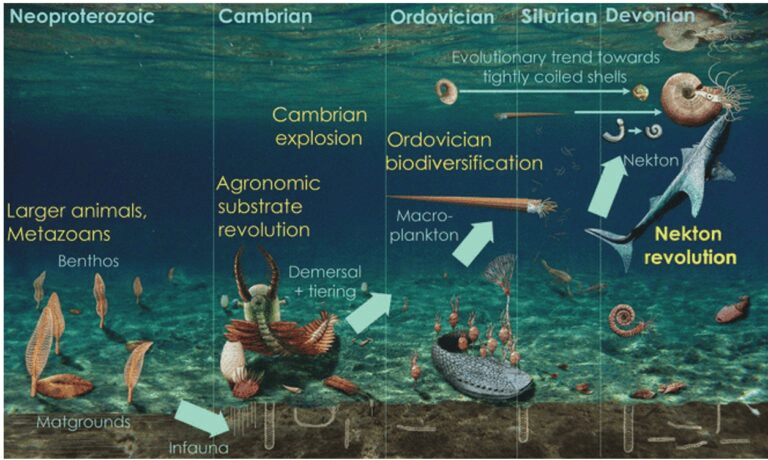
The student will use fossil data, ecological network analysis, and macroevolutionary approaches to explore how vertebrate predators emerged, diversified, and reshaped marine ecosystems during the Devonian Period. By integrating palaeontological evidence with quantitative ecological methods, the project seeks to uncover the ecological drivers and consequences of the rise of vertebrate apex predators.
Based at the University of Leeds, the project offers the opportunity to join a vibrant and supportive palaeobiology research group working on major questions in biodiversity, ecosystem evolution, extinction, and recovery across deep time. The student will receive interdisciplinary training through the YES DYN doctoral network and collaborate with a broad community of researchers across the environmental sciences.
The project is supervised by Professor Alex Dunhill, Professor Andrew Beckerman, Dr Cassius Morrison, Professor Paul Wignall, and Dr Joe Keating.
Prospective applicants interested in palaeontology, ecology, evolution, Earth history, or quantitative approaches to understanding biological change through time are encouraged to apply. Informal enquiries and expressions of interest are welcome and should be directed to a.dunhill@leeds.ac.uk.
Find all the info here: https://yes-dtn.ac.uk/research/yes-27-e-02-the-rise-of-vertebrate-apex-predators-and-the-ecological-origins-of-the-devonian-nekton-revolution/

